20 Mythology Deities Word Search Vol 7: A Practical Resource for Puzzle Book Creators and Educators
Puzzle books remain a consistent market in both print and digital publishing. Among the many formats available, themed word search collections offer a way to combine entertainment with learning. 20 Mythology Deities Word Search Vol 7, paired with the complementary 20 Ancient Mythological Deities Word Search collection, provides a focused interior template for anyone building activity books, classroom materials, or branded puzzle products. This article examines what these resources contain, how they fit into real workflows, and practical ways to integrate them into your projects.
What These Puzzle Interiors Include
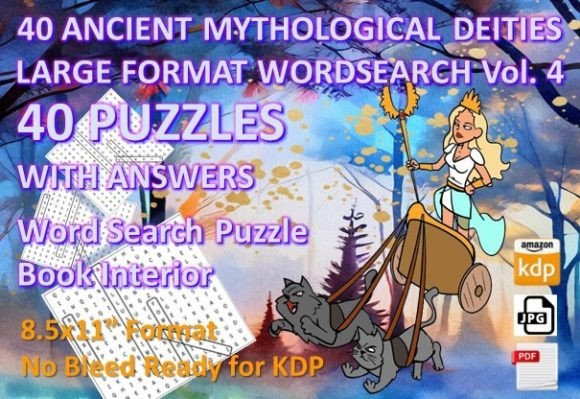
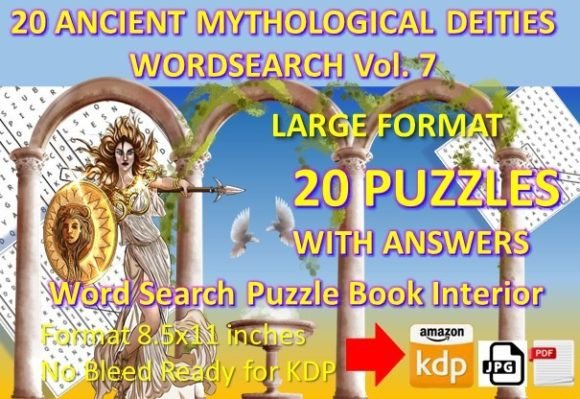
The 20 Mythology Deities Word Search Vol 7 interior is a ready-to-use template designed for KDP publishing. It delivers 20 distinct word search puzzles, each centered on deities from various mythological traditions. The companion set, 20 Ancient Mythological Deities Word Search, broadens the scope to include gods and goddesses from Roman, Chinese, Mayan, Gaelic, Greek, Egyptian, and other ancient civilizations. Each puzzle contains over ten search terms, and the complete solution set is included.
The files come in two formats: PDF and JPG. The dimensions are 8.5 × 11 inches with no bleed, which means you can use them directly in print-ready books without additional trimming adjustments. The interior does not include cover pages or introductory sales material, giving you full control over branding and presentation.
For publishers and creators, this format removes the need to design puzzles from scratch. You receive the core content and can adapt it to fit your own style, add instructions, include advertising pages, or combine it with other puzzle types to build a larger mixed activity book.
Where These Templates Fit in a Publishing Workflow
If you produce puzzle books for platforms like KDP, Etsy, or your own store, the most time-consuming part is often content creation. Designing grids, selecting themed word lists, and verifying solutions takes significant effort. A pre-made interior like 20 Mythology Deities Word Search Vol 7 eliminates that upfront work. You can go directly to layout, branding, and formatting.
Here is how it fits into a typical publishing process:
- Before publishing: Use the template as your content foundation. Download the PDF and JPG files, then open them in your preferred editing tool. Many creators use online PDF converters to modify text, adjust fonts, or add page numbers. Because the files are standard formats, they work with most editing software.
- During assembly: Insert the puzzles into your book structure. You might add an introduction page explaining the theme, a how-to-use section, or advertising for other books in your series. Since the interior has no bleed, you can place it directly onto standard letter-size pages without worrying about content being cut off.
- After publishing: The digital files remain reusable. You can repurpose the JPG images for social media previews, create sample pages for product listings, or use the PDF as a bonus gift for email subscribers. The versatility of the formats supports multiple distribution channels.
Practical Use Cases Beyond Publishing
While these interiors are designed for KDP books, their utility extends beyond commercial publishing. Consider these scenarios:
Classroom and Educational Settings
Teachers and homeschool educators often need supplementary materials that reinforce lesson content. A word search on Egyptian or Greek deities can serve as a review activity after a history unit. The puzzles require no preparation beyond printing, and the included answers make grading or self-checking straightforward. You can print directly from the PDF or select individual JPG files for specific puzzles.
Themed Activity Packs for Events
If you run a mythology club, museum program, or cultural event, these puzzles can be compiled into take-home activity sheets. The range of deities from multiple civilizations—Roman, Chinese, Mayan, Gaelic, and others—means you can customize packs based on the event focus. For a Greek mythology day, select the relevant puzzles; for a broader world mythology event, use the full set.
Content for Digital Products
Freelancers and small business owners who sell digital printables on platforms like Teachers Pay Teachers or Gumroad can use these interiors as a base. Add your own branding, adjust the layout to include space for name and date fields, and resell as a new product. Because you can edit the files, you have flexibility to differentiate your offering.
Integrating with Other Puzzle Types
A common strategy in puzzle book publishing is to create mixed-content volumes. A single book might contain word searches, crosswords, mazes, sudoku, and trivia pages. 20 Mythology Deities Word Search Vol 7 works well as one section within a larger collection. You can combine it with other themed puzzle sets—for example, adding a volume on mythological creatures or ancient civilizations—to create a comprehensive activity book.
When building a mixed book, consider the order of content. Start with easier puzzles to draw readers in, then progress to more challenging themes. The mythology deity puzzles sit naturally in the middle or later sections, as they require some familiarity with world cultures. You can also intersperse them with other puzzle types to maintain variety.
Editing and Customization Tips
One of the main advantages of this interior is that it is editable. Here are practical approaches to customization:
- Add your own introduction pages: Write a brief explanation of the puzzle theme, provide instructions, or include fun facts about the deities featured. This adds educational value and makes the book feel more complete.
- Incorporate branding: Insert your logo, website URL, or series branding on the first and last pages. Since the puzzles themselves are clean, you can overlay a subtle header or footer without distracting from the content.
- Adjust difficulty: If you find some puzzles too easy or too hard, you can modify the word lists or grid sizes using online PDF tools. The JPG format also allows you to overlay additional words or change font sizes.
- Combine multiple volumes: If you own other volumes in the series, you can merge them into one larger book. Simply compile the PDFs using a PDF merger tool and reorder the pages as needed.
- Create answer key sections: The solutions are included, but you may want to place them at the back of the book rather than after each puzzle. Rearranging pages is straightforward with most PDF editors.
Quality Control and Consistency
Before publishing, check a few elements to ensure a professional result:
- File resolution: The JPG files should be high enough resolution for print. Test by zooming in on a word or grid line—if edges remain sharp, the quality is adequate.
- Bleed and margins: Although the interior specifies no bleed, confirm that your chosen trim size matches. If you use the 8.5 × 11 inch dimensions exactly, no adjustment is needed.
- Solution accuracy: Verify that the answer keys correspond to the correct puzzles. A quick spot-check of a few words against the grid confirms consistency.
- Page numbering: If you add extra pages, ensure the numbering flows logically. Unnumbered puzzles can confuse readers, especially in a large book.
Long-Term Use and Reusability
Digital files do not degrade, so you can reuse these interiors across multiple projects. For example, you might publish a standalone volume titled 20 Mythology Deities Word Search Vol 7 this year, then include the same puzzles as part of a deluxe edition next year. You can also translate the word lists or instructions for non-English markets, provided you have the rights to do so.
The thematic nature of the puzzles gives them lasting appeal. Mythology and ancient cultures remain perennially popular topics in education and entertainment. As long as you maintain the files, you have a reusable asset that can generate income or serve educational purposes for years.
Practical Workflow Example
To illustrate how these interiors fit into a real project, here is a workflow used by many independent publishers:
- Download the files: Receive the PDF and JPG folders. Organize them on your computer with clear naming conventions, such as "Vol7_Puzzle01.pdf" and "Vol7_Solution01.pdf."
- Edit the introduction: Open the PDF in a converter tool. Add a title page with your brand name and a brief description of the puzzle theme. Include a line about the civilizations covered—Roman, Chinese, Mayan, Gaelic, Greek, Egyptian, and more.
- Assemble the book: Insert the 20 puzzles in numerical order. Add the solutions at the end or after each puzzle, depending on your preference. Include any additional activity pages if you are building a mixed book.
- Export for print: Save the final PDF as a print-ready file with embedded fonts and high-resolution images. For KDP, ensure the file meets their specific requirements for interior type and color mode.
- Create preview images: Use the JPG files to generate sample pages for your product listing. Show two or three puzzles and a portion of the answer key to give buyers confidence in the content.
- Upload and publish: Submit the interior file to your chosen platform. Write a product description that highlights the variety of deities and civilizations included.
Observations on Workflow Efficiency
Using a pre-made interior saves time, but the real efficiency gain comes from the ability to repurpose the content. Once you own the files, you are not limited to a single use. The same puzzles can appear in different products with different covers, introductions, or complementary content. This multiplies the value of your initial investment.
The inclusion of both PDF and JPG formats is practical. PDF preserves layout and is ideal for print, while JPG allows quick edits in image software. If you need to change a single puzzle, you can modify the JPG without affecting the rest of the book.
For educators, the time savings are equally valuable. Instead of designing word searches from scratch for each unit, you can print puzzles that align with your curriculum. The variety of ancient civilizations means you likely have a matching puzzle for topics you already teach.
Final Considerations
20 Mythology Deities Word Search Vol 7 and the related 20 Ancient Mythological Deities Word Search interior are practical tools for anyone creating puzzle books or educational activities. They offer ready-made content that is editable, reusable, and adaptable to different formats and audiences. Whether you are publishing on KDP, teaching a class, or building a digital product line, these templates remove the grunt work of puzzle creation and let you focus on presentation, branding, and distribution.
The key is to treat the files as a starting point, not a finished product. Add your own voice, customize the layout, and combine with other content to create something distinct. With the included PDF and JPG formats and the large 8.5 × 11 inch no-bleed dimensions, you have a solid foundation that fits standard workflows with minimal friction.