The Online Purchases Tracker: A Strategic Tool for Professionals and Creators in a Digital-First Economy
In an era defined by rapid e-commerce growth, subscription fatigue, and decentralized marketplaces, the humble purchase log has evolved from a personal budgeting aid into a strategic asset. For professionals, creators, entrepreneurs, marketers, and freelancers, every online transaction carries implications beyond the price tag—affecting cash flow, project timelines, tax records, and even client relationships. The Online Purchases Tracker and its companion Online Purchases Tracker Printable Template have emerged as deceptively simple yet powerful instruments for navigating this complexity. What appears at first glance to be a straightforward record-keeping sheet is, in practice, a lens through which we can better understand modern commerce, operational discipline, and the shifting expectations of how we manage resources in a digital-first landscape.
Far from being a niche tool for the hyper-organized, these trackers address a universal friction point in contemporary life: the gap between the ease of clicking "buy" and the difficulty of maintaining an accurate, audit-ready record of what was ordered, when it shipped, when it arrived, and what it cost. This article explores why the Online Purchases Tracker matters now more than ever, how it fits into broader trends in business technology and consumer behavior, and why creative professionals and entrepreneurs are increasingly turning to printable templates as a deliberate counterbalance to digital overload.
Why the Online Purchases Tracker Is Gaining Attention
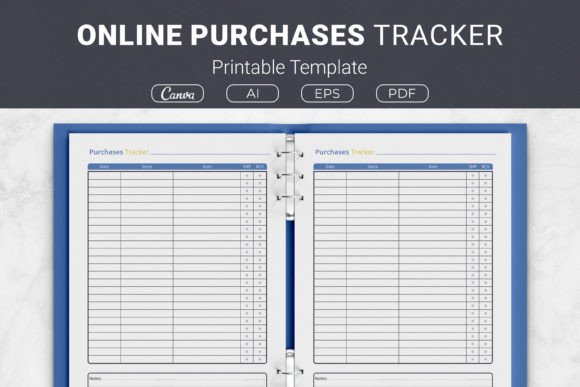
The logic behind an Online Purchases Tracker is elegantly simple: it provides a structured space to log the date, store, item, shipping status, receipt confirmation, and notes for every online order. Yet the reasons people are paying attention to it today go far beyond basic organization. Several converging forces have elevated this tool from a nice-to-have to a near-necessity for anyone managing a business, a creative practice, or a freelance operation.
First, the volume of online purchases has grown exponentially. Whether it's software subscriptions for design tools, raw materials for product-based businesses, marketing assets from stock platforms, or equipment for content creation, the average professional places dozens of individual orders each month. Without a centralized log, critical details fall through the cracks—a missing shipment, a duplicate order, an unaccounted expense that turns into a bookkeeping headache.
Second, the expectations around delivery and fulfillment have tightened. Clients and collaborators depend on timely receipt of materials. A freelancer waiting for a key piece of hardware, a marketer expecting promotional merchandise, or a creator tracking sample products for a campaign all need real-time visibility into order status. The Online Purchases Tracker Printable Template transforms this messy reality into a clean, actionable workflow. By filling in the date, store, item, shipped status, received status, and notes, any professional can instantly see where each order stands without toggling between six different email confirmations.
Third, there is growing awareness that digital fragmentation is not always solved by more digital tools. Many professionals are discovering that a physical or print-on-demand tracker offers cognitive relief. The act of writing down order details reinforces memory and creates a tactile reference that a screen notification cannot replicate. This is especially relevant for entrepreneurs and marketers who already spend hours in dashboards, spreadsheets, and project management apps. A printable template provides a bounded, intentional space for one specific type of data, free from the distractions of notifications and infinite tabs.
Broader Industry and Market Trends That Make This Tool Relevant
The rise of the Online Purchases Tracker mirrors larger shifts in how business technology and consumer expectations are evolving. One of the most significant trends is the demand for verifiable, low-friction record-keeping across distributed work environments. As remote teams and solo professionals multiply, the burden of proof for expenses, deliveries, and project inputs has shifted to individuals. An organized log of online purchases becomes a portable, shareable record that supports everything from reimbursement requests to tax filings.
Another relevant trend is the concept of "intentional consumption" in business operations. Just as consumers are becoming more mindful about what they buy personally, professionals are applying similar scrutiny to their business purchases. A tracker that includes a notes field becomes a decision-support tool: it allows users to reflect on whether a purchase delivered the expected value, whether a vendor was reliable, and whether a subscription was actually used. Over time, this creates a qualitative data set that informs smarter spending.
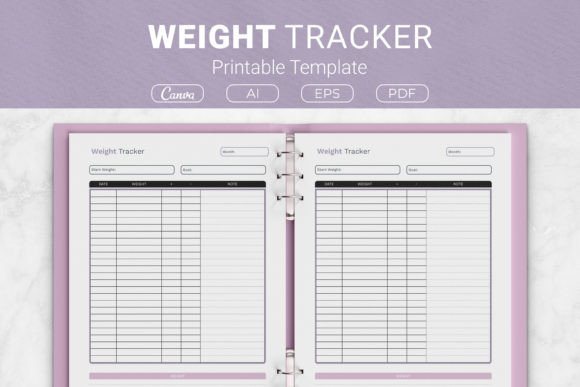
From a technology perspective, the market for printable and template-based productivity tools has experienced a notable resurgence. Even as software-based inventory and expense management solutions grow more sophisticated, there is a parallel appetite for templates that offer simplicity, portability, and zero dependency on internet connectivity or platform updates. The Online Purchases Tracker Printable Template addresses this precisely. It requires no login, no learning curve, and no subscription. It works as a KDP planner interior for Kindle Direct Publishing projects, as a printable insert for a binder, or as a standalone sheet for a clipboard. This versatility reflects a broader recognition that effective tools do not have to be complex; they just have to fit a real workflow.
Furthermore, the template's availability in multiple formats—AI, EPS, PDF, and Canva templates—speaks to the diverse needs of the creative and entrepreneurial audience. A graphic designer may edit the AI file to match their branding. A marketer pulling together a campaign binder may use the PDF. A freelancer who prefers a collaborative digital workspace may use the Canva link. This flexibility is not a luxury; it is a response to the reality that modern professionals operate across a spectrum of digital and analog environments.
Changing Needs, Workflows, and Expectations
Understanding why the Online Purchases Tracker resonates requires examining the changing workflows of its primary users. Professionals, creators, and entrepreneurs are increasingly expected to juggle multiple roles simultaneously. A solo entrepreneur might be the CEO, procurement officer, logistics coordinator, and accountant all in one. In that context, the ability to offload order tracking to a structured template is not just convenient—it is a form of cognitive outsourcing. The template acts as an external memory system that preserves mental bandwidth for higher-value creative and strategic work.
Freelancers and marketers face a particular challenge: they frequently purchase services and products from a wide array of vendors, each with its own shipping timeline, return policy, and communication channel. A typical month might include orders from a custom printing service, a stock photography platform, a software license vendor, and a materials supplier for a client project. Without a unified tracker, the freelancer risks missed delivery windows, duplicate purchases, and confusion over which order is associated with which client invoice. The Online Purchases Tracker solves this by providing a chronological, searchable (on paper) record that can be referenced in seconds.
There is also an evolving expectation around budget control. When every online purchase is logged in a dedicated tracker, it becomes straightforward to identify patterns: which stores are generating the most orders, which product categories consume the most budget, and whether there are orders that never arrived or were returned without a refund. For entrepreneurs and marketers managing limited budgets, this visibility is a form of control. It replaces guesswork with evidence, and it empowers more confident financial decisions.
Additionally, the tracker serves as a communication tool. In a team setting, a shared printed tracker or a PDF version can be used to keep stakeholders informed about order progress without constant status-check emails. For a creative agency ordering props for a shoot or a marketing team sourcing giveaways for an event, the tracker provides a shared source of truth that reduces friction and miscommunication.
Practical Examples of How the Tracker Fits Into Real Workflows
Imagine a freelance product photographer. She purchases backdrops, lighting modifiers, props, and software plugins from different suppliers. Using the Online Purchases Tracker Printable Template, she logs each order with the date, store, item, and shipping status. She uses the notes field to record the invoice number and the specific client project the purchase is for. At tax time, she has a clean, chronological log that simplifies categorization and deduction tracking. More immediately, she can glance at her tracker and know exactly which orders are delayed without opening a single email.
Consider a marketing professional managing a product launch. They order samples, packaging, promotional materials, and digital assets from multiple vendors. The tracker becomes the command center for procurement logistics. Each row captures the essential workflow: ordered, shipped, received. If a shipment is late, the notes field allows them to document follow-up actions. At the end of the campaign, the tracker doubles as a post-mortem document showing which vendors performed well and which were unreliable.
For an entrepreneur building a direct-to-consumer brand, the tracker helps manage inventory-related purchases—everything from packaging supplies to raw materials. By consistently logging orders, they can spot trends in lead times and shipping costs, enabling them to negotiate better terms with suppliers. The tracker also helps avoid duplicate purchases, which is a real risk when ordering from multiple suppliers across different marketplaces.
A content creator who purchases props, tech devices, and software subscriptions for their channel can use the tracker to separate personal from business expenses. The notes field is ideal for tagging each purchase with its purpose: "review video," "streaming setup," "editing software." This level of granularity is invaluable when calculating the profitability of a creative venture.
Connecting the Tracker to Larger Developments
The emergence of the Online Purchases Tracker as a recognized tool type is part of a broader movement toward intentional organization in an age of abundance. As e-commerce becomes ever more frictionless, the need for conscious tracking grows proportionally. This is not a rejection of digital tools but a complementary strategy. Many professionals find that a printable tracker serves as a grounding ritual—a deliberate pause in the buying cycle that encourages reflection before and after a purchase.
There is also a connection to the growing interest in "analog productivity" and the use of physical or printable tools to balance digital saturation. The Online Purchases Tracker Printable Template fulfills that role perfectly: it is digital in its distribution (available as AI, EPS, PDF, and Canva templates) but analog in its primary use (printed and filled in by hand). This hybrid approach is increasingly recognized as a best practice for knowledge workers who want the best of both worlds.
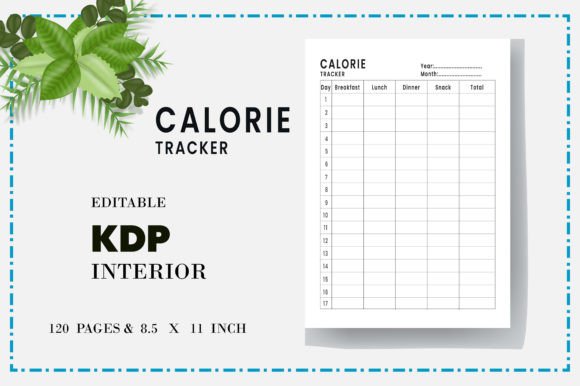
From a publishing and content creation perspective, the template is also a versatile asset for Kindle Direct Publishing (KDP) projects. Entrepreneurs and creatives who produce planners, notebooks, and logbooks for niche audiences can use this tracker as an interior page. The demand for such content is rising as more people look for structured tools to manage their specific workflows. By offering sizes including US Letter 8.5 x 11 in, A4 210 x 297 mm, 7.5 x 9.25 in, and 6 x 9 in, the template suits standard printing formats and popular planner sizes, making it immediately useful for both personal use and commercial publishing.
Finally, the broader marketplace for printables continues to grow, driven by the rise of print-on-demand services, home printing, and the convenience of digital downloads. The Online Purchases Tracker fits squarely into this ecosystem. It addresses a universal need with a design that is simultaneously minimal, functional, and adaptable. For the professional who values efficiency, clarity, and control, it is not merely a piece of paper—it is a small but consequential infrastructure for managing the complexities of modern commerce.
Conclusion: Why This Tool Matters Now
In a business environment where every transaction carries weight—financial, operational, and reputational—the ability to track online purchases accurately is not an optional nicety. It is a core competency for anyone who buys goods or services as part of their professional life. The Online Purchases Tracker and the Online Purchases Tracker Printable Template provide a lightweight, robust, and adaptable framework for doing exactly that. They help professionals, creators, entrepreneurs, marketers, and freelancers stay organized, avoid costly mistakes, manage budgets, and maintain clear records for themselves and their teams.
The template's availability in multiple file formats and sizes—including AI, EPS, PDF, and Canva—ensures that it can be integrated into virtually any workflow, from a purely analog binder system to a fully digital environment. Its potential as a KDP planner interior adds further value for those looking to create publishable content. Above all, it reflects a mature understanding that in a world overflowing with digital noise, sometimes the most effective tool is a clean piece of paper that asks the right questions: what did you buy, when did it ship, when did it arrive, and what do you need to remember? For anyone serious about running their professional life with intention, that clarity is worth its weight in gold.