The Ultimate Guide to Guitar Sheet Music, Tablature, and Blank Charts for Every Musician
Whether you are just picking up a guitar for the first time or have been playing for decades, the ability to read, write, and organize music is an essential skill. Guitar sheet music with tablature—commonly called "tab"—offers a straightforward way to translate musical ideas into playable notes on the fretboard. When you add a blank chart to the mix, you unlock a world of creative and educational possibilities. In this guide, we will explore everything you need to know about guitar sheet music tab with blank charts, including why they matter, how to use them effectively, and how a simple 8.5 x 11 inch printable PDF can transform your practice sessions, teaching methods, and songwriting workflow.
What Is Guitar Sheet Music with Tab and Blank Chart?
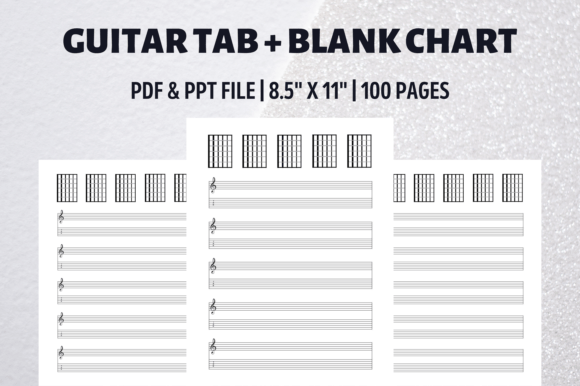
At its core, guitar sheet music with tab combines traditional musical notation (the five-line staff) with a six-line tablature staff that represents the six strings of the guitar. Numbers on the tab lines indicate which fret to press, making it incredibly intuitive for players who may not yet be fluent in standard notation. A blank chart is simply a template that contains the staff lines and tab lines—but no notes written in yet. This blank canvas allows you to compose, transcribe, or arrange music exactly the way you want.
A product offering 100 pages of these blank templates, in a convenient 8.5 x 11 inch format, gives you a substantial resource for all your musical endeavors. With printable PDF files along with JPG and PPT source files, you can instantly download and print as many as you want. This means you never run out of space to write down riffs, chord progressions, solos, or full arrangements.
Why Blank Guitar Tab Charts Are Essential for Learning and Teaching
Blank guitar tab charts serve as a bridge between theory and practice. They are not just for professional composers—they are for anyone who wants to capture a musical idea before it slips away. Here are some of the most powerful reasons to keep a stack of blank tab sheets handy:
- Active Learning: Writing down a melody or chord progression by hand reinforces your understanding of the fretboard. It engages your brain in a way that passive reading cannot.
- Custom Exercises: Teachers can create personalized exercises for students, targeting specific techniques like hammer-ons, pull-offs, bends, or fingerpicking patterns.
- Song Transcription: When you learn a song by ear, transcribing it onto a blank chart helps you remember it forever and analyze its structure.
- Composition and Songwriting: Blank charts give you the freedom to sketch out original ideas without the constraints of pre-printed music.
- Practice Organization: Keep a dedicated notebook of blank tab sheets to track your progress, note difficult passages, and mark areas for improvement.
Understanding the Layout: 8.5 x 11 Inches and 100 Pages
The dimensions 8.5 x 11 inches are the standard letter size used in North America, making these pages easy to print on any home or office printer. The 100-page count provides ample room for months of practice, teaching, and creative work. Whether you bind them into a custom notebook, keep them in a three-ring binder, or print single sheets as needed, the format is designed for maximum convenience and flexibility.
The inclusion of PDF, JPG, and PPT source files means you can edit the templates in presentation software like PowerPoint, resize images for digital use, or simply print high-quality PDFs directly. This versatility is especially valuable for educators who want to customize the charts for different lessons or for students who prefer to work digitally on a tablet.
What Makes a Good Blank Guitar Tab Chart?
Not all blank tab charts are created equal. A well-designed template should include:
- Clear, legible staff lines with standard musical notation staves at the top.
- Six precise tab lines that correspond to the guitar strings (high E at the top, low E at the bottom).
- Enough spacing between systems to allow for chord diagrams, lyrics, or performance notes.
- Margins that allow for hole-punching or binding without cutting off content.
- A clean, uncluttered design that works for both beginners and advanced players.
The product you are considering meets all these criteria, offering a professional-grade template that you can rely on for years of musical development.
Practical Applications in Modern Life and Creativity
Guitar sheet music with blank charts is not a relic of the past. In today's digital age, it plays a vital role in how musicians learn, teach, and create. Here is how it fits into modern contexts:
For Beginners: Building a Strong Foundation
If you are new to the guitar, the combination of standard notation and tablature can feel overwhelming at first. But blank charts simplify the process: you can start by writing out simple open chords, then progress to single-note melodies, and eventually tackle full songs. The act of writing reinforces muscle memory and theoretical understanding simultaneously. With 100 printable pages, you have plenty of room to practice without pressure.
For Educators: Streamlining Lesson Plans
Music teachers often need to prepare materials for multiple students with different skill levels. Having a printable PDF file with blank charts allows you to create custom exercises on the fly. You can write out scales, arpeggios, or short etudes tailored to each student's needs. The JPG and PPT source files let you overlay digital annotations or insert chord diagrams, making your lessons more interactive and professional.
For Songwriters: Capturing Inspiration Instantly
Inspiration rarely strikes at convenient times. A blank tab chart is your best friend when a riff pops into your head. You can quickly jot down the fret numbers and rhythm, ensuring you do not lose that creative spark. Later, you can expand your ideas into full arrangements, using the blank chart as the foundation for your songwriting notebook.
For Advanced Players: Deepening Musical Understanding
Even experienced guitarists benefit from writing out complex solos or jazz chord voicings. Transcribing solos from your favorite players onto blank charts helps you internalize their phrasing and technique. It is one of the most effective ways to improve your ear, your fretboard knowledge, and your overall musicianship.
How to Use Your Printable Guitar Tab Sheets Effectively
To get the most out of your guitar sheet music tab with blank chart product, follow these practical tips:
- Print in batches: Print 20–30 pages at a time and keep them in a binder. This way, you always have fresh sheets ready.
- Use a pencil: Write lightly so you can erase mistakes and reuse pages for practice. For final compositions, use a pen.
- Create a legend: At the top of each page, note the key, time signature, and any special techniques (e.g., "capo on 3rd fret" or "tuning: drop D").
- Combine with chord diagrams: Use the margins or extra space to draw small chord boxes for quick reference.
- Go digital: Import the JPG or PPT files into a note-taking app on your tablet and write with a stylus for an eco-friendly workflow.
- Share with others: If you are in a band, print extra copies for bandmates. Collaboration becomes seamless when everyone has the same clean template.
Clarifying Common Misunderstandings About Guitar Tab and Blank Charts
Despite their popularity, guitar tablature and blank charts are sometimes misunderstood. Let us clear up a few common points:
- "Tab is only for beginners." Not true. Many professional guitarists use tab for quick notation because it directly shows where to place your fingers. It is a complement to standard notation, not a replacement.
- "Blank charts are only for teachers." Actually, every guitarist can benefit from blank charts. They are tools for active engagement with music, not just passive consumption.
- "Printable PDFs are outdated." In a world of apps and digital notation software, printable PDFs remain incredibly versatile. You can use them offline, handwrite annotations, and physically organize your materials in a way that some digital tools cannot replicate.
- "You need to be able to read music to use tab." Tablature is designed to be read without formal music theory training. The numbers tell you exactly which fret to play, making it accessible to absolute beginners.
The Bigger Picture: Why This Product Matters for Your Musical Journey
Music is a language, and like any language, it requires tools for writing and reading. A guitar sheet music tab with blank chart is one of the most fundamental tools you can own. It empowers you to:
- Capture fleeting creative ideas before they disappear.
- Structure your practice sessions with clear goals.
- Communicate musical ideas to other musicians clearly.
- Build a personal archive of songs, exercises, and compositions.
- Develop a deeper, more intuitive understanding of the guitar fretboard.
In an age where digital tools dominate, the simple act of putting pencil to paper—or stylus to screen—remains one of the most effective ways to learn and create. The 100-page printable PDF format ensures you never run out of space, while the JPG and PPT source files give you the flexibility to adapt the templates to your unique workflow.
Final Thoughts: Start Your Collection Today
Whether you are a teacher preparing for a semester of lessons, a songwriter working on your next album, or a beginner eager to learn your first scale, having a reliable supply of blank guitar tab charts is invaluable. The combination of standard notation staves and tablature lines on a clean, spacious layout makes these sheets suitable for any musical genre—rock, classical, jazz, blues, folk, or metal.
With instant download and the freedom to print as many as you want, you can start using them immediately. No waiting, no shipping, no limits. Simply download the files, print a stack, and begin filling the pages with your musical ideas. Your future self will thank you for every riff, chord, and melody you capture.
Don't forget to follow us for more updates—we regularly share tips, resources, and new products to support your musical journey. Thank you for reading, and happy playing!